


At its best, self-assessment is a vital tool for supporting athletic development. It offers a structured way for athletes to analyze their actions and guide their learning process. Most importantly, self-assessment helps shift an athlete from a passive participant to an active leader of their own progression.
However, the benefits of self-assessment do not happen automatically. Focusing solely on a straight line to success can cause coaches and athletes to overlook the potential challenges of the methodology. At worst, this reduces the reliability of self-assessment and leaves its potential untapped.
In my thesis, I examined the significance of self-assessment in team sports to identify both its benefits and challenges. Only by understanding these factors can we build a framework for successful implementation. Once I defined these parameters, I was able to map out how to best utilize self-assessment in practical training—a topic I cover in detail in another blog post.
This article focuses specifically on highlighting those benefits and challenges.
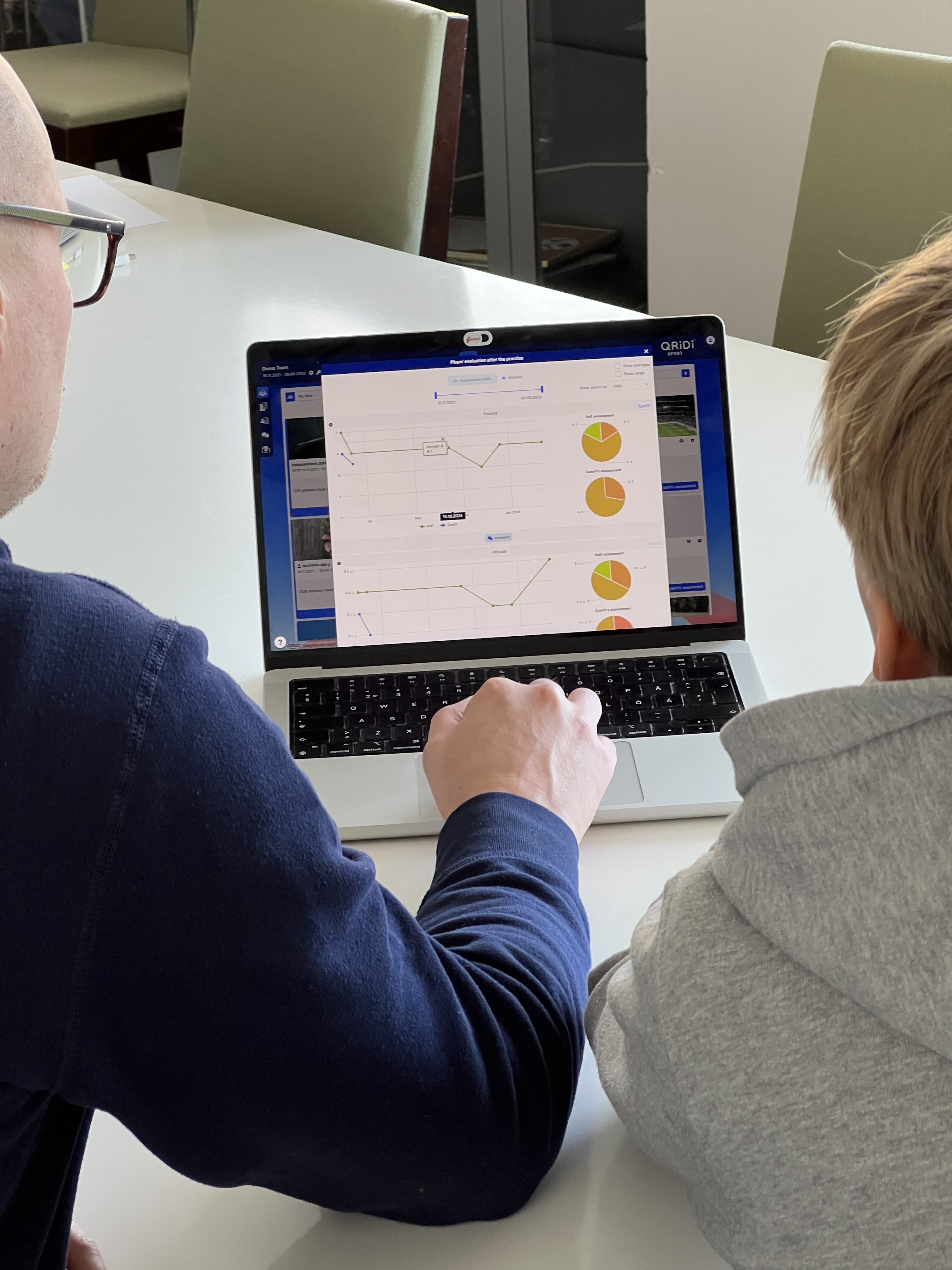
Self-assessment does not develop an athlete in just one single dimension. When assessment is versatile, it strengthens an athlete’s self-concept, self-esteem, self-direction, and accountability for their own learning process.
Research shows that self-assessment helps athletes take ownership of their progress. When filling out a self-assessment form, athletes are naturally prompted to evaluate what they have done and learned. Even athletes inclined toward passivity step into an active role, realizing that they have direct control over their own progress.
When part of the responsibility for growth shifts to the athlete, their overall commitment to the training process deepens. Intrinsic motivation encourages athletes to train for themselves rather than solely for external rewards or recognition. This mindset also makes handling the inevitable disappointments of a sporting career much easier.
Furthermore, intrinsic motivation directly serves performance outcomes: having autonomy over one's actions is linked to better athletic results. When self-assessment is done right, it boosts confidence, helping athletes truly believe that success is within their reach.
Self-assessment directly supports one of the three core psychological needs: autonomy. Autonomy refers to an individual's experience that their actions are self-chosen and self-directed.
The impact of autonomy is far-reaching. When an athlete's basic psychological needs are met, they are far more willing to operate collaboratively within a team toward shared goals and values. Because they feel seen and respected as individuals, resistance fades.
Allowing athletes to influence their own training and goal-setting taps into broader ethical practices, such as fairness, respect for the individual, and responsibility. These principles build a solid, respectable foundation for modern athletic coaching.
Not all benefits of self-assessment are immediately visible. Self-assessment tends to positively impact an athlete’s metacognitive skills—their ability to identify and adjust how they learn over time.
Metacognition involves stepping back to observe one's own thinking, memory, and learning processes. In short, self-assessment triggers both conscious and subconscious reflection. These metacognitive skills refine gradually and remain valuable long after an athlete steps off the field.
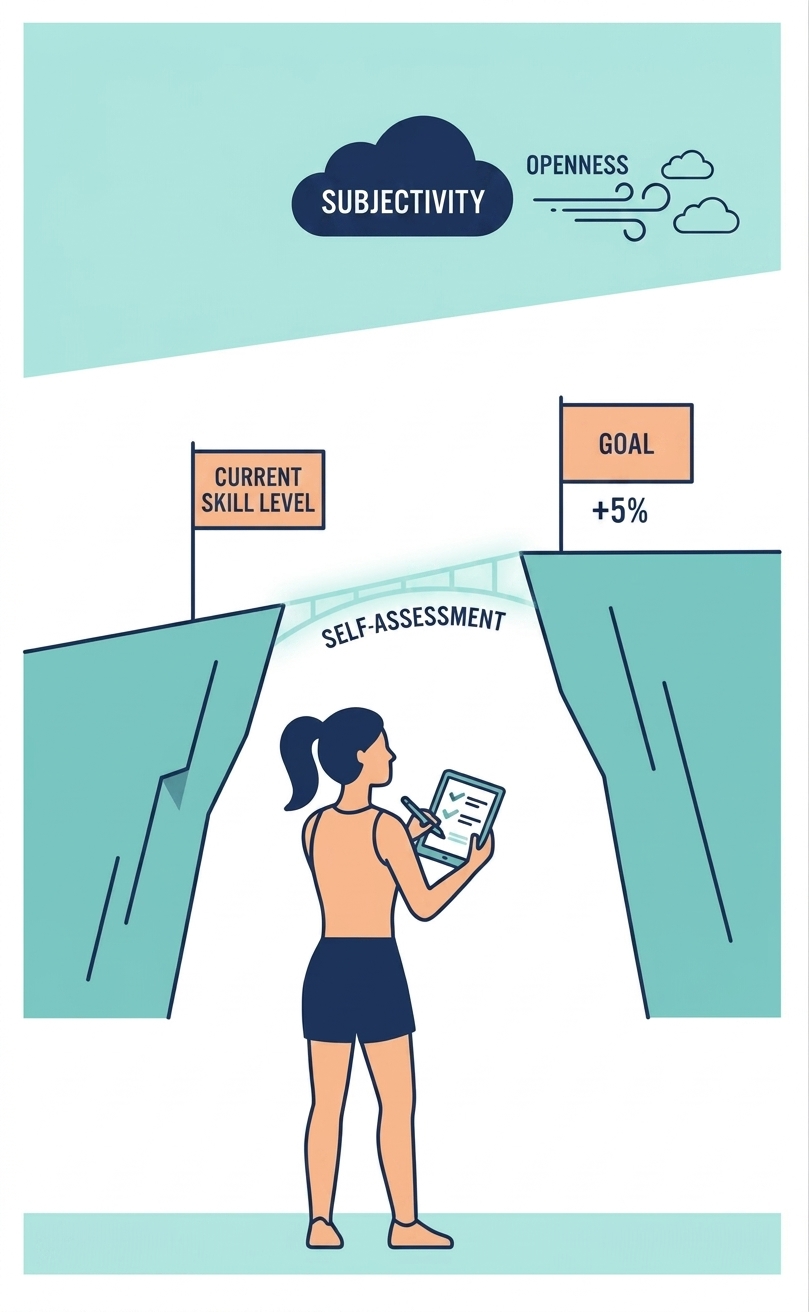
Self-assessment is not a quick shortcut to success. The methodology itself rests on a paradox: you can assess yourself effectively, provided you are evaluating the right things in the right way.
For assessment to work, athletes must fully understand the target goals and evaluation criteria. If goals are improperly set, the accuracy of the self-assessment deteriorates. Athletes must also understand why they are doing the assessment; otherwise, it becomes a mechanical exercise completed just for the sake of it.
When setting goals, a helpful rule of thumb is the 5% principle: set targets roughly 5% above the athlete's current skill level.
Regarding criteria, it is the coach's responsibility to clearly outline the standard of execution, the metrics for success, and how the athlete can actively influence the outcome.
Coaches play a crucial role in the success of self-assessment by providing necessary guidance. Self-assessment should not be done completely in isolation without support, as this can undermine its reliability.
However, coaching should not be exclusively coach-centric. Overly dominant leadership suppresses the athlete's internal drive, shrinking their sense of agency and commitment to the process. Overcoming deep-seated, coach-centric habits takes time and deliberate effort from the coaching staff.
How can we ensure an athlete evaluates themselves honestly? Self-assessment always carries a risk of bias, heavily influenced by the social environment and the athlete's self-image.
Humans have an innate desire for acceptance within their social group, and athletes in a team setting are no exception. An athlete seeking approval may lose sight of their authentic self-perception, filling out forms to please teammates or coaches rather than reflecting honestly. When this happens, meaningful personal growth stalls.
Can—or should—we eliminate environmental social influences entirely? Not really. Reliability is built through consistency: executing self-assessments repeatedly over extended periods.
Accurate self-evaluation is not learned overnight. Honest, precise evaluation of one's skills, areas for growth, and performances requires continuous practice.
The solution is to give the evaluation process time. When starting out, self-assessments can be paired with coach observations to allow athletes to build this skill at an appropriate pace.
The investment pays off: strong self-assessment skills lay the foundation for steady performance development and the pursuit of elite-level results—the ultimate goal in competitive team sports.
What picture emerges when we weigh the benefits against the challenges? Effective self-assessment can be described in three main ways: learning-oriented, goal-driven, and regular.
Furthermore, self-assessment must take place within a safe, open, and encouraging environment. Supportive assessment yields far better results—especially for young athletes—than criticism-heavy formats that erode confidence.
In performance-driven environments, the underlying driver is the desire to feel competent. The athlete—not the coach—is the first person to evaluate a performance. Prioritizing the athlete's perspective shifts long-standing power imbalances toward a collaborative dynamic.
Ultimately, good self-assessment is not a one-time event; it is an ongoing process of development. When integrated consistently, it helps athletes keep their goals top of mind and systematically achieve them.
Author: Emilia Tiitto
Sources: Tiitto, E. 2026. The Significance of Self-Assessment in Team Sports (Itsearvioinnin merkitys joukkueurheilussa). Master's / Bachelor's Thesis, Lapland University of Applied Sciences.
Images:
Jenna Eronen
Gemini AI