

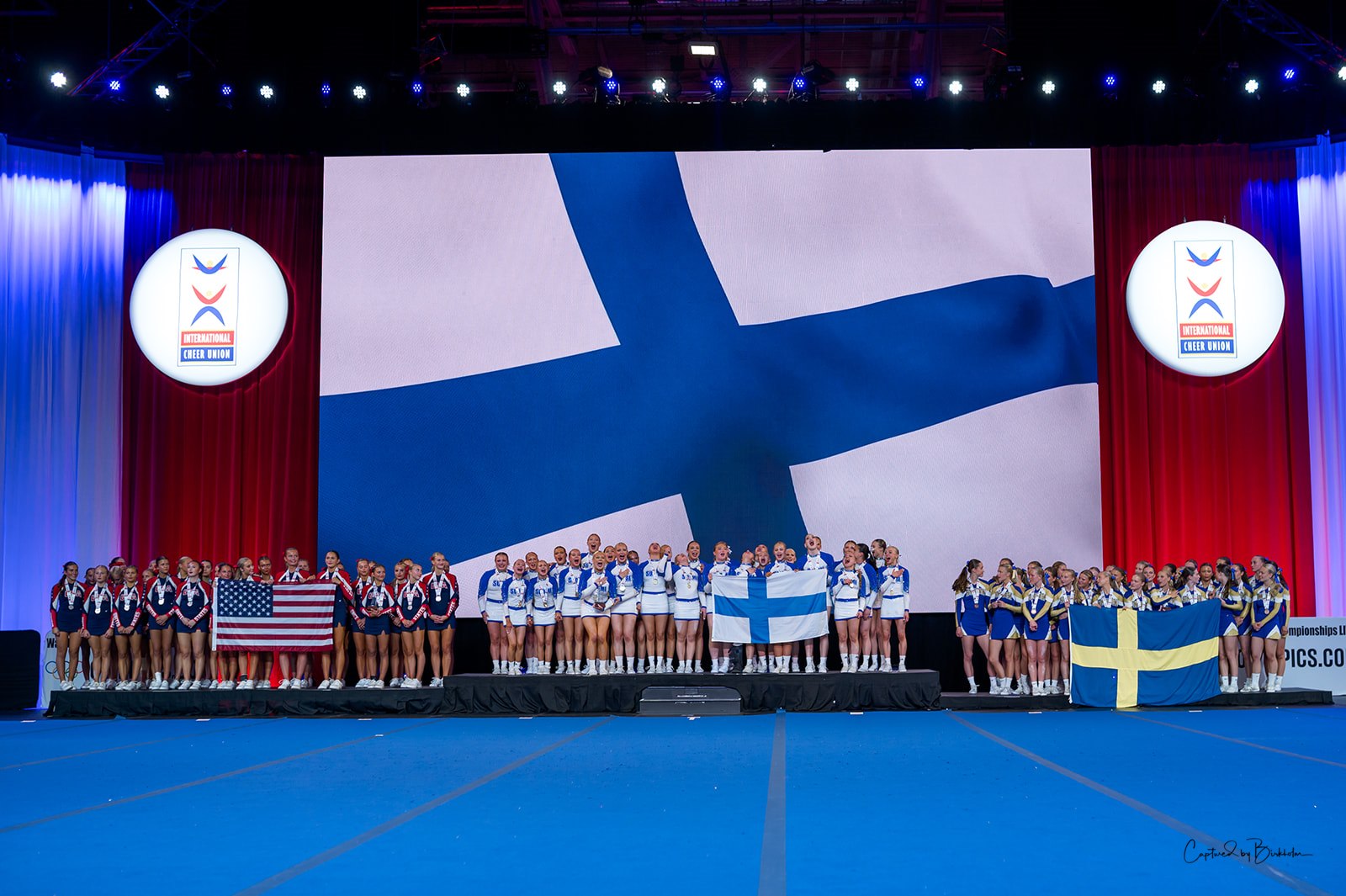
When it comes to world championships in sports, success isn’t just about a single flawless performance. It’s the result of years of work, culture, and everyday choices. For Finland’s junior national cheerleading team, reaching the top is no accident - it’s a systematically built process.
Coach Emilia Granholm describes the team’s goal simply but ambitiously:
“The team’s goal is to win the World Championship at the April competition. Additionally, we aim for our program to be technically difficult yet clean.”
This goal says a lot. It’s not just about maximizing difficulty, but also about quality, control, and the ability to perform under pressure. This mindset influences every aspect of the team’s work - from planning training sessions to monitoring athlete load.
Elite performance cannot be achieved without psychological safety. In the junior national team, culture is consciously built around core values.
“The team’s values are: trust, safety, and courage.”
Granholm emphasizes that these values are not just words on a wall but principles guiding daily actions.
“It’s important for the team that everyone’s opinions are heard, we trust each other, we trust the coaches’ decisions, we dare to be brave and take risks, and we dare to aim for a world championship.”
When athletes feel safe, they are willing to take risks - and in cheerleading, taking risks often means attempting new, technically demanding elements. Courage, therefore, is not just a feeling; it’s a performance-enhancing factor.

Finland’s success on the international stage is no coincidence. Granholm highlights the importance of strong domestic competition:
“Cheerleading in Finland has grown every year, and especially the Junior All Girl Elite division is very competitive.”
A strong domestic league helps teams develop continuously. When competition is already tough at home, international competitions don’t come as a surprise. Additionally, Finland has a solid coaching culture and expertise in building programs and understanding judging criteria.
The 2018 women’s national team world championship permanently changed the mindset:
“The first world championship gold for the women’s national team in 2018 inspired everyone - we really are a strong cheerleading nation!”
Belief in one’s own abilities is a competitive advantage that cannot be measured in points but shows in performance.
One of the most significant themes in the junior national team’s daily life is load management. Athletes train with the national team, their club teams, and often also at sports academies. The competition season is long: World Championships in spring, Finnish Championships in early summer, and European Championships mid-summer - with nearly all athletes participating in all events.
Granholm puts it bluntly:
“The challenge is everyday life, combining many training sessions and finding balance.”
To support this, the team adopted the Qridi Sport app.
“This season, we started using the Qridi Sport app to track athlete load.”
Load monitoring is not limited to training volume. Qridi tracks sleep duration and overall strain, providing coaches with data for informed decision-making.
“We plan training camp content with this data and adjust workloads based on how load has looked in recent weeks.”
If an athlete’s load remains high for an extended period, coaches intervene promptly.
“We contact the athlete proactively if it looks like they’ve had a sustained high workload."
This is a concrete example of how a digital tool supports athlete well-being - not just for reporting, but to inform decisions. If you want to learn more about monitoring athlete load, read our previous blog.
Qridi Sport is not just a load-tracking tool for the team. It also serves as a communication and feedback platform.
The coaching team moved conversations from WhatsApp to Qridi to avoid overloading athletes with multiple channels. Separate discussion threads are created for stunt groups, individual athletes, and small teams.
This has brought three advantages: 1) communication is centralized, 2) feedback is documented, and 3) the athlete’s overall picture is kept in one place.
Before each training camp, athletes complete a survey in Qridi, helping coaches understand their condition before sessions begin. Granholm summarizes the benefit:
“We can track load concretely and act faster if something isn’t right. We get tangible data more easily than before!”
With multiple tools consolidated, the coach’s work becomes more efficient, allowing energy to focus on actual coaching. The goal is to understand, support, and help the athlete.
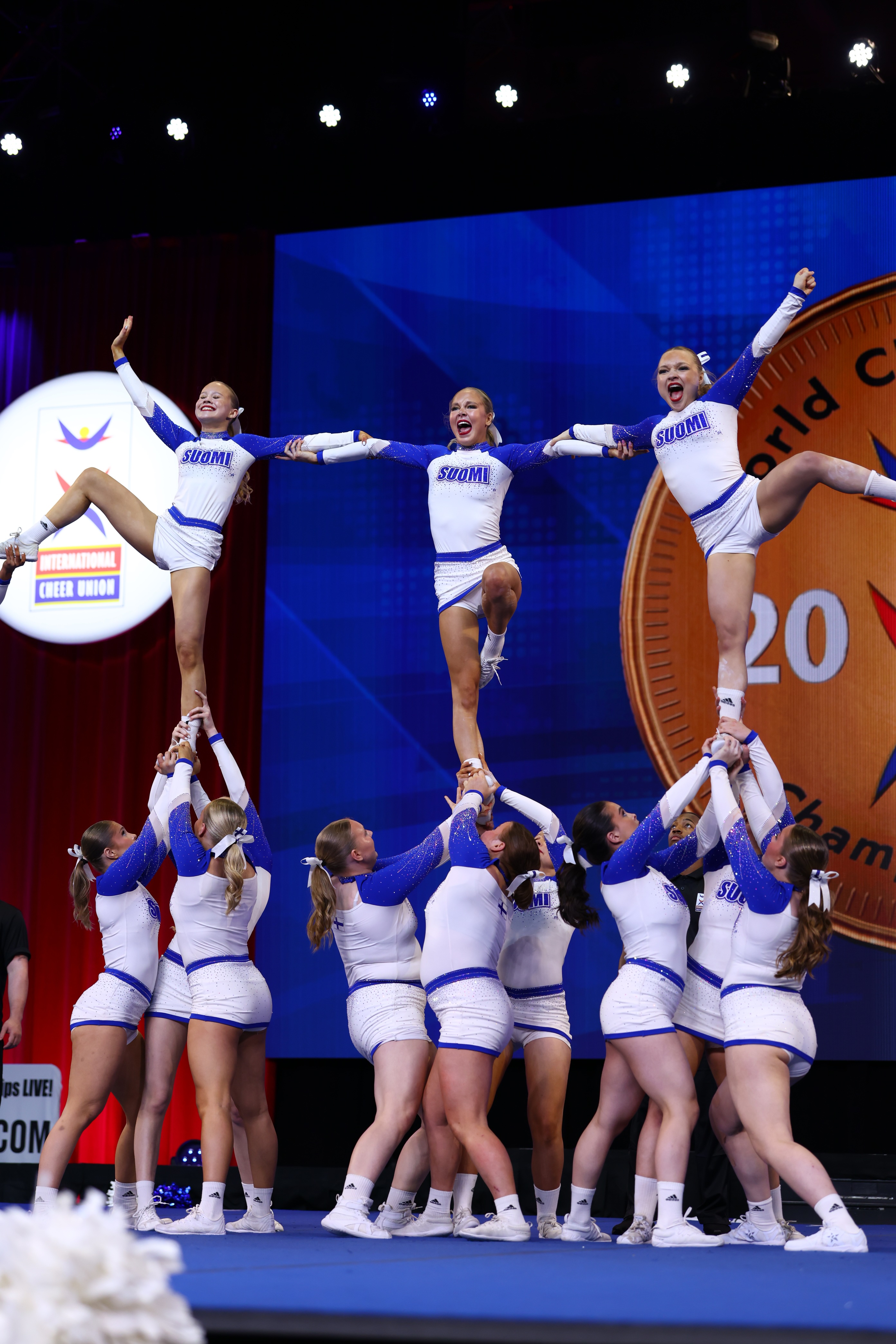
In an elite team, every camp is part of a larger whole. Granholm explains that the team has a seasonal plan with goals to be achieved at each camp, though the plan adapts to circumstances.
“The seasonal plan is continuously updated, as changes can always occur.”
Stunt groups also train independently between camps, with clear goals to ensure that joint sessions focus on team objectives. Granholm emphasizes responsibility:
“In national team sports, the athlete carries a lot of responsibility, as independent training is a big part of preparation.”
This fosters self-direction - a skill that benefits athletes far beyond their sports careers.
In competitions, differences often come down to mental strength. The junior national team has its own mental coach, who works with the team regularly.
“The team has a dedicated mental coach, Susan Demirtas.”
Mental skills are practiced at every camp, and athletes can also have one-on-one sessions. This builds security and helps manage competitive pressure, which is crucial when aiming for world championships.
Granholm believes that courage and experimentation are cheerleading’s strengths.
“We hope other sports will dare to aim high and work for it, trying different approaches and crossing traditional boundaries.”
Load monitoring and data-driven coaching are themes the junior team wants to continue developing.
“Load management is definitely an area we want to focus on even more in the future.”
The goal is not just to win now, but to build a sustainable athlete pathway, enabling later transition to the senior national team.
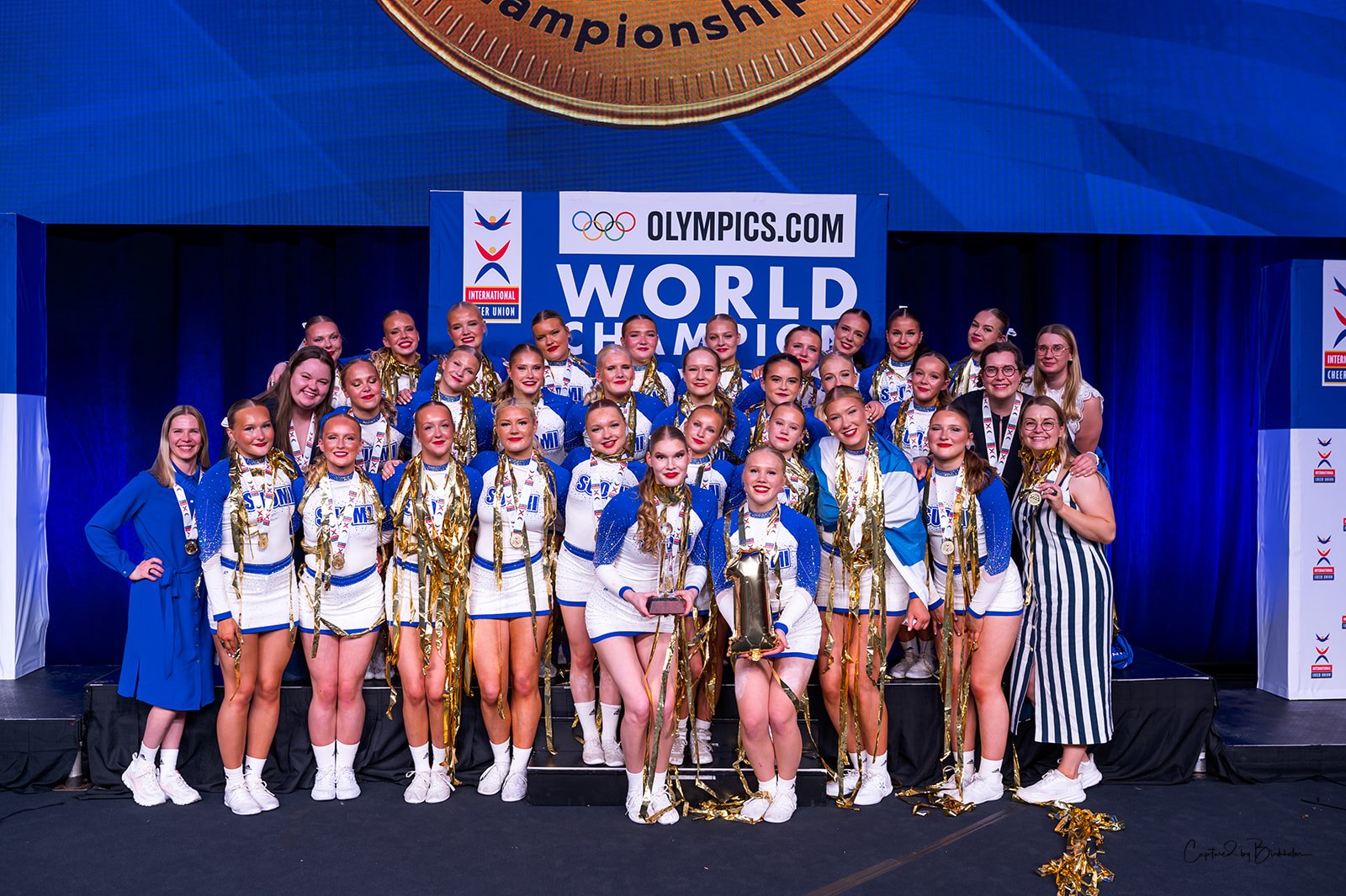
The Finnish junior national cheerleading team’s success is no accident – it is built through deliberate daily choices. The team operates with clear goals that guide training and program development, alongside a strong value base creating a safe and courageous environment for athletes.
Systematic training planning, combined with digital load monitoring, open communication, and mental coaching, ensures athletes develop holistically and sustainably toward world championship goals. Each camp, independent training session, and feedback moment supports the journey toward peak performance.
Success is not a single competition, but a long-term process where every daily choice brings the team closer to the top, as Granholm says:
“In cheerleading, we are brave and dare to do things differently than before!”
This process requires courage, planning, and continuous commitment - and this combination is what makes Finnish cheerleading internationally competitive and sustainable. Want to learn more about the importance of team dynamics in cheerleading? Check out our previous cheerleading blog.
Read more about Finland’s national cheerleading teams:: https://www.scl.fi/briefly-in-english/